Fool
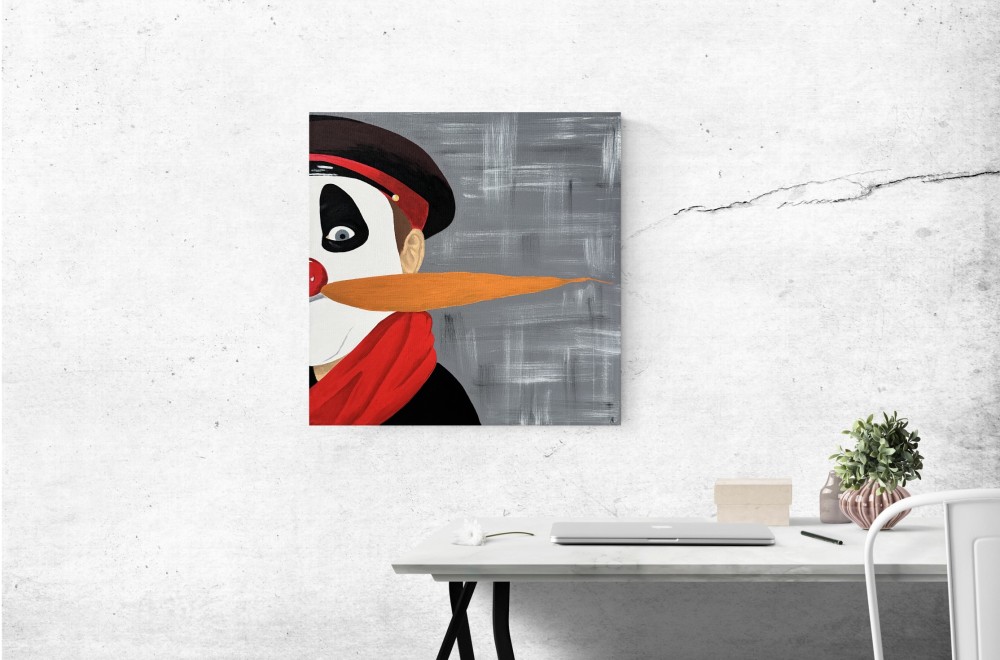
A recognizable character—the Peasant from Village of Fools—is depicted in this painting, yet stripped of his familiar grotesque and comedy. This is neither a stage image nor a joke, but a frozen moment of silence after laughter. The character’s face appears as if half disappearing from the frame. The clown makeup remains, but the gaze is wary and focused, as though the character is encountering himself for the first time outside the stage and beyond the role. The character is no longer performing—he is left alone with silence. The painting was created after the actor’s death, and in this context the image becomes a memorial: not an official monument, but a quiet, intimate form of remembrance. This work is about how characters continue to live on after the actors who embodied them are gone. About a clown who no longer makes us laugh, yet still looks at us. And about gratitude—for the laughter, for the naïveté, for that simple joy that once existed and has stayed with us forever.